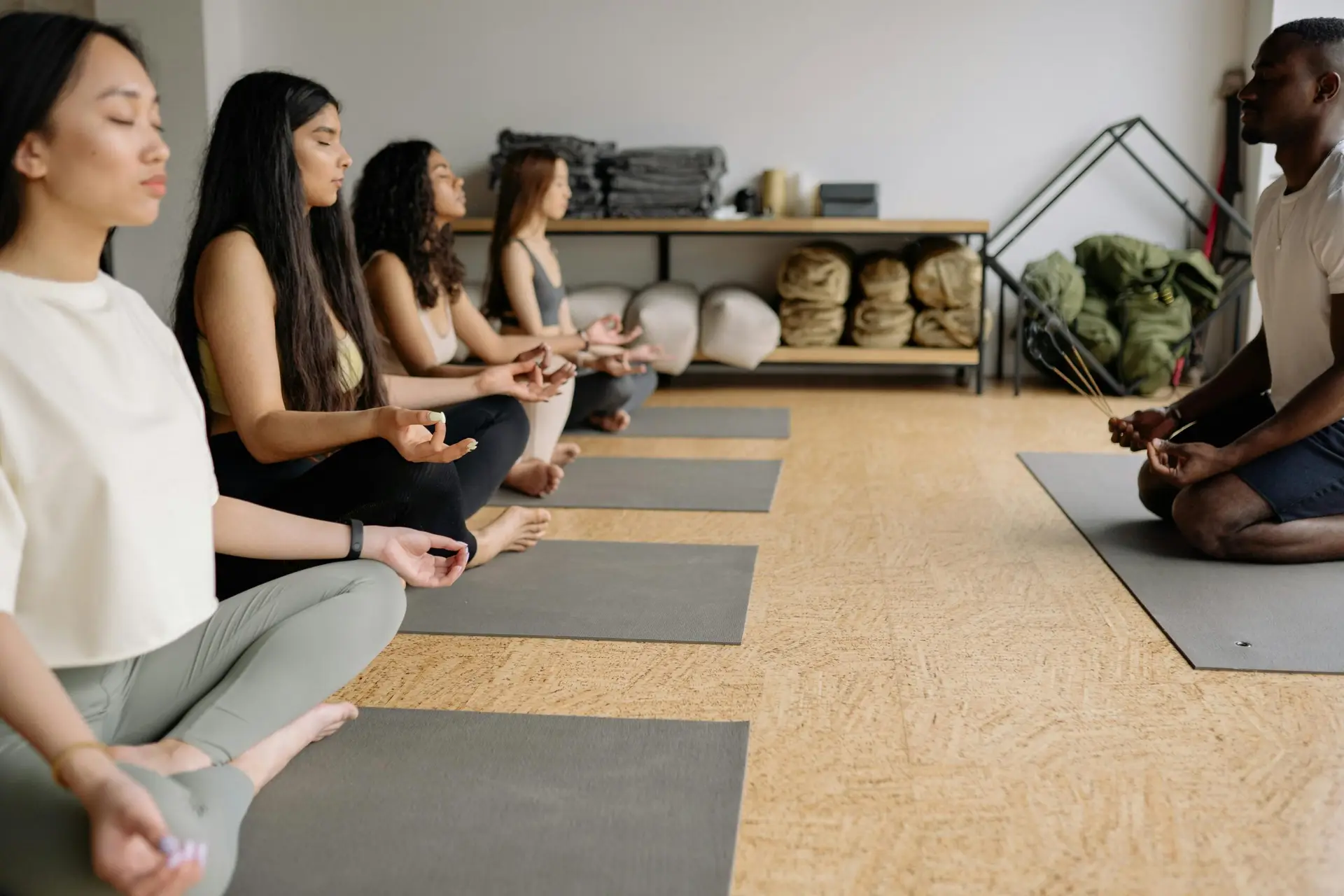

Guided vs. Unguided Meditation: Which One is Right for You?

Introduction

Meditation is a powerful tool for improving mental clarity, reducing stress, and boosting emotional well-being. But when you start your meditation journey, you’ll quickly encounter two main approaches: guided and unguided meditation. While both offer benefits, the right choice depends on your personality, goals, and lifestyle. In this article, we’ll break down the differences, advantages, and disadvantages of each, helping you choose the path that suits you best.

What is Guided Meditation?

Guided meditation involves listening to an instructor—either in person or via an app, audio track, or video—who leads you through the session. This may include spoken instructions, visualization prompts, breathing techniques, and background music.

Common Forms of Guided Meditation:

  • Mindfulness meditation
  • Body scan relaxation
  • Visualization exercises
  • Loving-kindness meditation

Best For: Beginners, individuals who struggle with focus, and those who prefer a structured approach.

What is Unguided Meditation?

Unguided meditation, also known as self-directed meditation, is when you meditate without spoken guidance. You rely on personal techniques such as focusing on the breath, chanting a mantra, or simply observing thoughts without attachment.

Common Forms of Unguided Meditation:

  • Breath awareness
  • Silent mantra meditation
  • Zazen (Zen meditation)
  • Open monitoring

Best For: Experienced meditators, those who enjoy independence, and people who want a deep, personal practice.

Pros and Cons of Guided Meditation

Pros:

  • Easy for beginners
  • Helps maintain focus
  • Can introduce new techniques
  • Reduces uncertainty about “doing it right”

Cons:

  • May feel dependent on external guidance
  • Limited flexibility
  • Requires audio/video access

Pros and Cons of Unguided Meditation

Pros:

  • Complete freedom and flexibility
  • No need for technology
  • Can be done anywhere, anytime
  • Allows deeper self-discovery

Cons:

  • Harder for beginners to maintain focus
  • No feedback or correction
  • May lead to inconsistent practice

How to Choose the Right Approach

Ask yourself:

  1. Are you a beginner or an experienced meditator?
  2. Do you prefer structure or freedom?
  3. Do you need help staying focused?
  4. Do you enjoy learning from others or experimenting on your own?

Tip: Many meditators use a hybrid approach—starting with guided sessions and gradually incorporating unguided meditation for flexibility.

Popular Apps for Guided Meditation

  • Headspace
  • Calm
  • Insight Timer
  • Balance

Final Thoughts

Whether you choose guided or unguided meditation, the key is consistency. Meditation works best when it becomes a part of your daily routine. Start where you feel comfortable, experiment with both methods, and adapt as your practice evolves.

Mindful Living: How to Stay Present in a Busy World

Introduction – The Art of Slowing Down

We live in a world that moves at lightning speed. From juggling work deadlines to managing social obligations, it’s easy to feel overwhelmed and disconnected from the present moment. Mindful living is the antidote—it’s about fully engaging with life as it unfolds, without being trapped by the past or anxious about the future.

In this article, we’ll explore practical mindfulness habits you can integrate into your day, no matter how busy you are.

Section 1 – What is Mindful Living?

Mindful living means paying attention to your thoughts, feelings, and surroundings in the present moment.

It’s not about emptying your mind—it’s about noticing what’s happening without judgment.

Key aspects include:

  • Awareness of your thoughts and emotions
  • Engaging fully in daily activities
  • Responding intentionally rather than reacting automatically

Section 2 – Why It’s Hard to Be Present

Our modern environment encourages constant distraction:

  • Smartphones demand our attention
  • Social media keeps our minds elsewhere
  • Multitasking reduces focus and deep engagement

This leads to mental fatigue, stress, and a constant sense of rushing.

Section 3 – Benefits of Mindful Living

Scientific studies show that living mindfully can:

  • Reduce stress and anxiety
  • Improve focus and productivity
  • Strengthen relationships through better listening
  • Enhance overall happiness and life satisfaction

Section 4 – 7 Practical Habits for Mindful Living

Here are easy ways to start living mindfully today:

  1. Start the Day Without Your Phone
  2. Spend the first 10 minutes of your day in silence or gratitude instead of scrolling.
  3. Practice Single-Tasking
  4. Focus on one activity at a time, whether eating, working, or talking.
  5. Mindful Breathing Breaks
  6. Pause for 3–5 deep breaths several times a day to reset your mind.
  7. Savor Your Meals
  8. Eat slowly, notice flavors and textures, and avoid screens.
  9. Mindful Walking
  10. Pay attention to each step, your surroundings, and your breathing.
  11. Digital Detox Windows
  12. Set specific times to disconnect from technology.
  13. Gratitude Journaling
  14. Write down three things you’re thankful for each night.

Section 5 – Mindfulness in Relationships

Being present with others means:

  • Listening without planning your response
  • Maintaining eye contact
  • Valuing silence instead of filling every pause

When you’re truly present, you deepen emotional connections.

Section 6 – Overcoming Common Challenges

You might face:

  • Restlessness: Start with short moments of mindfulness.
  • Distractions: Reduce unnecessary notifications.
  • Self-Judgment: Accept that mindfulness is a skill you build over time.

Conclusion – Make Mindfulness a Way of Life

Mindful living is not a one-time practice—it’s a lifelong habit. By making minor adjustments, you can transform your relationship with time, improve mental clarity, and cultivate lasting peace.

The Science Behind Meditation: How It Changes Your Brain

Introduction

In today’s fast-paced world, stress, anxiety, and constant distractions have become part of daily life. While meditation is often seen as a spiritual or relaxation practice, science reveals something more profound — it changes the structure and function of the brain. From improving focus to reducing stress hormones, meditation’s benefits are now backed by solid neuroscience. In this article, we’ll explore the fascinating science behind meditation and how it reshapes your mind for the better.

Why Science Is Interested in Meditation

For centuries, meditation was practiced mainly for spiritual growth, but modern research has shifted the focus to its measurable physical and mental benefits. Using MRI scans, EEG readings, and brain mapping, scientists have discovered that meditation can:

  • Change brain structure (neuroplasticity)
  • Improve mental health and emotional stability
  • Enhance learning, memory, and focus
  • Reduce symptoms of anxiety and depression

1. Meditation and Neuroplasticity

Neuroplasticity refers to the brain’s ability to adapt and form new connections. Regular meditation strengthens neural pathways related to focus and emotional regulation while weakening those tied to stress and overthinking.

  • Harvard studies found that 8 weeks of mindfulness meditation increased the thickness of the prefrontal cortex (responsible for decision-making and concentration).
  • The amygdala, which triggers fear and stress responses, showed reduced activity in regular meditators.

2. Boosting Focus and Attention

One of the most notable effects of meditation is its ability to improve sustained attention. A study from the University of California showed that participants who practiced meditation daily had better concentration during demanding tasks.

  • Mindfulness meditation strengthens the anterior cingulate cortex, the part of the brain responsible for attention control.
  • Mindfulness meditation makes it easier to stay focused, even in a world full of distractions.

3. Reducing Stress and Anxiety

Stress is directly linked to high cortisol levels. Meditation helps bring those levels down by activating the parasympathetic nervous system, which promotes relaxation.

  • 8 weeks of mindfulness training were shown to significantly reduce cortisol production in participants significantly.
  • Brain scans reveal reduced activity in the default mode network (DMN) — the part of the brain that wanders when we overthink, worry, or dwell on the past.

4. Enhancing Emotional Stability

Meditation increases gray matter density in the hippocampus, which is linked to emotional balance and memory. It also improves connectivity between brain regions that regulate mood.

  • Regular practitioners often report lower emotional reactivity and higher resilience during stressful events.
  • Loving-kindness meditation, in particular, boosts positive emotions and empathy.

5. Slowing Down Brain Aging

Meditation may help slow down age-related cognitive decline. MRI scans have shown that long-term meditators maintain thicker cortical regions than non-meditators, even in older age.

  • Meditation could mean better memory retention and sharper thinking skills in later years.

How to Start a Brain-Boosting Meditation Practice

If you want to enjoy these neurological benefits, consistency is key. Here’s a simple approach:

  1. Choose Your Time – Morning or evening, pick a time you can stick to daily.
  2. Set a Short Goal – Begin with 5–10 minutes and gradually increase to 20–30 minutes.
  3. Focus on Breathing – Use slow, deep breaths to anchor your attention.
  4. Acknowledge Thoughts – Don’t fight distractions; notice them and return to your breath.
  5. Try Apps or Guided Sessions – Tools like Headspace or Calm can help you get started.

Conclusion

Meditation isn’t just a wellness trend — it’s a scientifically proven method for rewiring your brain. By improving focus, lowering stress, enhancing emotional stability, and even slowing down brain aging, meditation offers a long list of mental and physical benefits. With just a few minutes of daily practice, you can start shaping your brain for a calmer, sharper, and more resilient life.

10-Minute Daily Mindfulness Practices to Reduce Stress

Introduction

In today’s fast-paced world, stress seems like a constant companion. Whether it’s work deadlines, family responsibilities, or unexpected challenges, our minds often get stuck in overdrive. The good news? You don’t need to retreat to a mountain or spend hours meditating to find peace. Just 10 minutes a day of mindfulness can dramatically reduce stress and improve mental clarity.

In this article, we’ll explore simple, quick, and effective mindfulness techniques that you can easily fit into your busy schedule.

What is Mindfulness?

Mindfulness is the art of being fully present in the moment — without judgment. It means noticing your thoughts, feelings, and surroundings without getting swept away by them.

Research shows that mindfulness can:

  • Lower cortisol (stress hormone) levels
  • Improve focus and memory
  • Reduce anxiety and depression symptoms
  • Enhance overall well-being

The best part? You can practice it anytime, anywhere, even if you have just 10 minutes.

Why 10 Minutes is Enough

Many people believe that meditation and mindfulness require hours of quiet sitting. In reality, studies suggest that as little as 10 minutes of focused mindfulness each day can create noticeable benefits.

This short burst of intentional awareness works because:

  • It breaks the cycle of stress and overthinking.
  • It gives your brain a “reset” moment.
  • Consistency matters more than duration.

5 Easy 10-Minute Mindfulness Practices

1. Mindful Breathing (2–3 minutes)

How to do it:

  1. Sit comfortably and close your eyes.
  2. Inhale deeply through your nose for 4 seconds.
  3. Hold your breath for 2 seconds.
  4. Exhale slowly through your mouth for 6 seconds.
  5. Repeat for 2–3 minutes.

Why it works:

Mindful breathing slows your heart rate, signals your body to relax, and helps clear mental clutter.

2. Body Scan Meditation (3 minutes)

How to do it:

  1. Sit or lie down comfortably.
  2. Close your eyes and focus on your toes.
  3. Slowly move your attention upward — feet, legs, hips, stomach, chest, arms, neck, and head.
  4. Notice any tension and consciously relax those muscles.

Why it works:

It helps you reconnect with your body and release stored physical tension.

3. Mindful Walking (5 minutes)

How to do it:

  1. Walk slowly in a quiet space.
  2. Pay attention to how your feet touch the ground.
  3. Notice your breath, posture, and surroundings.
  4. Avoid looking at your phone during this time.

Why it works:

Combines light movement with mindfulness, perfect for people who find sitting still difficult.

4. Gratitude Reflection (2 minutes)

How to do it:

  1. Think of 3 things you’re grateful for.
  2. Reflect on why they matter to you.
  3. Write them down if possible.

Why it works:

Gratitude shifts your mind from stress to appreciation, boosting happiness levels.

5. Mindful Eating (5 minutes)

How to do it:

  1. Choose a small piece of food (like fruit or a snack).
  2. Notice its texture, smell, and color.
  3. Eat slowly, savoring each bite.
  4. Focus entirely on the experience, not on your phone or TV.

Why it works:

It transforms a daily habit into a calming ritual, helping you slow down and enjoy the moment.

Tips to Make Mindfulness a Habit

  • Schedule it: Add a 10-minute mindfulness break to your calendar.
  • Start small: Even 3–5 minutes is better than none.
  • Be patient: Your mind may wander — it’s normal. Gently bring it back.
  • Mix it up: Try different techniques to keep it fresh.

Conclusion

You don’t need hours of meditation to feel calmer and more focused. Just 10 minutes of daily mindfulness can help reduce stress, improve mood, and boost productivity. The key is consistency — make it part of your daily routine, and over time, you’ll notice a real shift in your mental and emotional well-being.

Start today, and give yourself the gift of peace in just 10 minutes.

Meditation for Beginners: A Step-by-Step Guide to Inner Peace

Introduction: Why Meditation Matters More Than Ever

In today’s fast-paced world, our minds are constantly overwhelmed with thoughts, notifications, and endless to-do lists. Stress, anxiety, and lack of focus have become a part of daily life for many. But what if you could find a way to slow down, breathe, and reconnect with your inner calm? That’s precisely what meditation offers.

For beginners, meditation may seem mysterious or even intimidating. But in reality, it’s a simple practice that anyone can learn. You don’t need a special cushion, incense, or years of training. You need a few minutes a day and the willingness to be present.

This step-by-step guide will walk you through how to meditate as a beginner, the benefits you can expect, and practical tips to make meditation a part of your daily life.

1. What is Meditation?

Meditation is the practice of focusing your mind and training your awareness to achieve mental clarity, emotional balance, and inner peace. It’s not about stopping your thoughts entirely — it’s about observing them without judgment and learning to live in the present moment.

There are many forms of meditation, including:

  • Mindfulness meditation – focusing on the present moment without judgment.
  • Mantra meditation – repeating a calming word or phrase.
  • Breath awareness meditation – concentrating on slow, deep breathing.
  • Guided meditation – following audio or video instructions.

2. The Benefits of Meditation for Beginners

Even if you meditate for just a few minutes a day, you can experience noticeable benefits:

  • Reduces stress and anxiety by calming the nervous system.
  • Improves focus and concentration by training your mind to stay present.
  • Boosts emotional health by promoting positive thinking and self-awareness.
  • Enhances sleep quality by reducing overthinking before bed.
  • Strengthens self-discipline by creating a consistent daily habit.

Studies show that regular meditation can change the structure of your brain, increasing the areas responsible for memory, empathy, and emotional regulation.

3. Step-by-Step Meditation Guide for Beginners

If you’re new to meditation, here’s a simple way to start:

Step 1: Choose a Quiet Spot

Find a place where you won’t be disturbed. It could be your bedroom, a park bench, or even your car during a lunch break.

Step 2: Sit Comfortably

You can sit cross-legged on the floor, in a chair with your feet flat, or even lie down if necessary. Keep your back straight but relaxed.

Step 3: Close Your Eyes and Breathe

Take slow, deep breaths. Inhale through your nose for 4 seconds, hold for 2 seconds, exhale through your mouth for 6 seconds.

Step 4: Focus on Your Breath

Notice how the air feels entering and leaving your body. If your mind wanders (and it will), gently bring your focus back to your breathing.

Step 5: Start Small

Begin with 2–5 minutes a day and gradually increase to 10–20 minutes.

4. Common Mistakes Beginners Make (and How to Avoid Them)

  • Expecting instant results – Meditation is a skill; benefits come with time.
  • Forcing thoughts away – Instead, let them come and go naturally.
  • Inconsistent practice – Make it a daily habit, even for a few minutes.
  • Overcomplicating it – You don’t need perfection, just presence.

5. Tips to Build a Consistent Meditation Habit

  • Set a fixed time daily – mornings are great for a fresh mind.
  • Use a meditation app like Calm, Headspace, or Insight Timer for guidance.
  • Create a ritual – light a candle or play soft background music.
  • Track your progress – even a simple journal note helps build consistency.

6. Guided vs. Solo Meditation: Which is Better for Beginners?

  • Guided meditation is perfect for beginners because it provides step-by-step instructions.
  • Solo meditation offers more flexibility, but it requires practice to maintain focus.

You can start with guided sessions and gradually move to self-led practice.

7. How to Overcome Restlessness and Distraction

If you find it hard to sit still or focus, try:

  • Shorter sessions (just 2 minutes to start).
  • Walking meditation (focus on each step and breath).
  • Using a mantra (repeat words like “peace” or “calm”).

Conclusion: Your Journey to Inner Peace Starts Today

Meditation is a simple yet powerful practice that can transform your mind, body, and overall well-being. You don’t need to wait for the perfect time — start today, even if it’s just for two minutes. Over time, you’ll notice that life feels a little calmer, your thoughts become clearer, and you’re able to face challenges with more ease.

Exit mobile version